Behind every old front door is a story waiting to be pieced back together...
‘”Today is August 4, 2026,” said a … voice from the kitchen ceiling, “in the city of Allendale, California.“ It repeated the date three times for memory’s sake. “Today is Mr. Featherstone’s birthday. Today is the anniversary of Tilita’s marriage. Insurance is payable, as are the water, gas, and light bills.”’
The robotic voice of the house in Ray Bradbury’s There Will Come Soft Rains calls out to its residents, sharing with them essential information: birthdates, wedding anniversaries. Markers of human life and its ever-evolving nature, all contained within the walls of a house.
In Bradbury’s narrative, the house’s words fall on deaf ears. Every resident is missing. Written in 1950, Bradbury imagines 2026 as an apocalyptic world in which human life has been eradicated in an unexplained disaster. Unperturbed, the technologically advanced house continues to automatically perform its daily functions: cleaning, washing dishes, preparing breakfast for mouths it will never again feed.
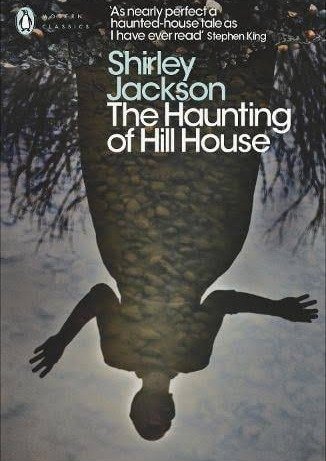
The house not only serves a practical purpose in our lives but is able to imprint upon our imaginations. Across literature, the house has often featured as a main character, taking on an anthropomorphic quality: it terrorises in Shirley Jackson’s The Haunting of Hill House, it protects in Juan José Arreola’s The House, and in Bradbury’s narrative it stands alone as an entity now independent of human intervention, the final reminder of humanity in a desolate world. The story offers a reminder: our houses precede us and they will outlast each generation that calls a house their own.
I vividly remember, as a child, spending many a cold Christmas Eve in my grandfather’s modest childhood home, attending family dinners. In between politely refusing an extra serving of potatoes I would stare at the photographs of my great-grandparents that hung on the walls. The house hadn’t undergone much in the way of modernisation, so it wasn’t too difficult to conjure up images of my great-grandparents: joking, laughing, loving their children. The same red brick walls witnessed the vibrant lives of those figures who stared unblinkingly down at me.
While hopefully avoiding an event as dramatic as an apocalypse, Bradbury’s words speak to a certain truth. How many of us absent-mindedly go about our daily lives without ever pausing to listen to stories of the homes in which we live?
Our houses may not have robotic voices, but they communicate in several other ways. Approximately 21% of UK houses were constructed before 1919, meaning that the very architecture can facilitate a conversation between the homeowner and the past. Building materials act as a time capsule (timber frames for Tudor-period houses, for example) while the original features of heritage homes (such as the decorative plasterwork of the Georgian and Victorian eras) reveal the personalities of former residents. The hidden lives of former residents are also revealed through traditional genealogical records: census returns, directories and maps.
There is a compelling scene in the Netflix show, Shtisel, in which the character ‘Shulem’ paraphrases the writer, Isaac Bashevis Singer:
‘The dead don’t go anywhere. They’re all here. Every man is a cemetery — an actual cemetery, in whom lie all our grandmothers and grandfathers, the father and mother, the wife, the child. Everyone is here all the time.’
If every man is a cemetery, then every home is a museum and every homeowner a custodian.
If your walls could talk, what would they say? And would you listen?
Might a voice whisper, “Today is 23 July 1819. Today is the Christening of Anne Adams.“?
Or, “It is August 1892,” the voice of your house might say, “The wedding of Dr H.H. Williams and Miss Gertrude Lloyd Evans.“
Perhaps a mournful voice could be heard lamenting, “Today is the anniversary of the death of Mr. Samuel Evans. 25 April 1885.”
The date repeated three times for memory’s sake.
For memory’s sake.
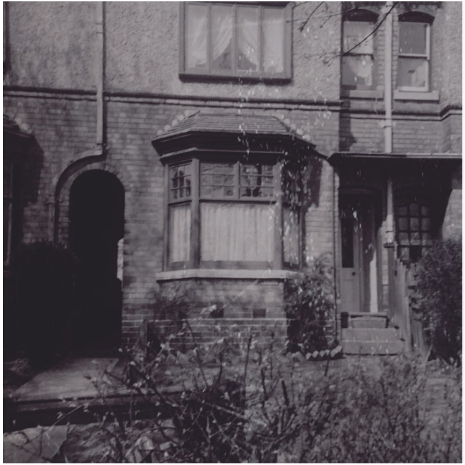
Our journal, Built to Last, asks the question ‘What does it mean to be a good custodian?’ Through essays, conversations and stories rooted in real buildings and the people who care for them, we explore what it takes to preserve an old home’s fabric and its story - and the decisions that shape both.
At Pursuing the Past, we research and write beautifully presented House Stories, turning historical detail into lasting pieces of storytelling that deepen your connection to your home and invite you to take your place as custodian of its continuing story.