Behind the Curtain
“It is seven o’clock in the evening, and we are going to the play… I am about to launch into a deliriously exciting account of those charmed regions which lie beyond the stage-door... Now, friend and fellow-traveller of mine, do you mind… coming with me “behind the scenes?”
~ George Augustus Sala
No play can be performed without the support of a production team. The team is made up of multiple professionals who contribute to the operational function of a theatre production. Just like a backstage crew, a Victorian household relied on staff to bring the idyll of the home to life. Depending on the size of the house, the staff would vary from a single maid to a large retinue ranging from a butler to lower maids. This article focuses on the staff of an established middle- class home with a medium sized staff, which is representative of many households.
Front of House
“[The Housekeeper] must remember that she is the soul of the house, and that its success depends entirely upon her. Her great object should be to ensure that the machinery of the household moves so smoothly, that its presence is never felt.” / “The duties of the servants should be performed noiselessly, and without confusion, so that the comfort of the guests may be enhanced by the absence of all apparent effort.”
~ Isabella Beeton
A theatre operates through illusion. From the moment you set foot in it, the experience greeting you is one of luxury, of entering a different world from the one you have left behind. A Victorian home also endeavoured to project this illusion. The Mistress of Illusion was the Housekeeper.
Theatre of the Past Production Manager: the Housekeeper
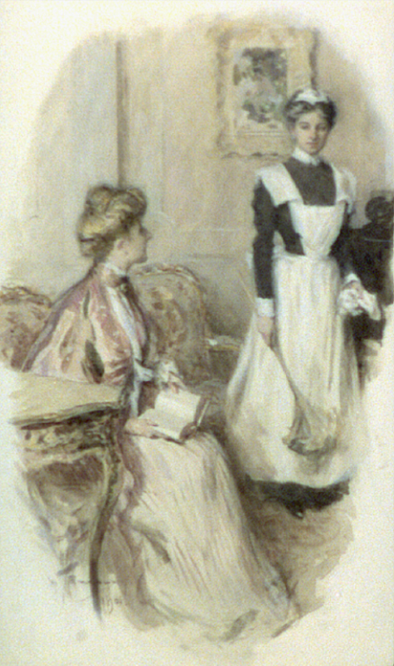
In most middle-class homes, the role of the Housekeeper was maintained by the Mistress of the house. The home, as presented by the Mistress, was that of a swan; calm and elegant on the surface but with feet kicking frantically below water to keep afloat. The Housekeeper was responsible for backstage management, the equivalent of a production manager. She would manage the household budget and accounts, inspect the linens and kitchen as well as ensure the food supplies were maintained. If a formal Housekeeper could be afforded, she would have daily meetings with the Mistress to ensure the direction of the household was running smoothly.
Theatre of the Past Usher: the Parlour Maid
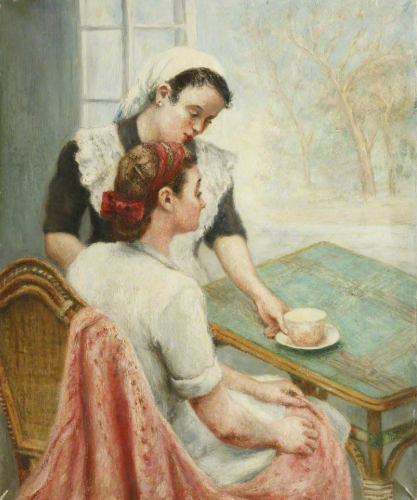
The first person to be seen upon entering a house was the parlour maid. Hiring staff in the Victorian era was dominated by the Male Servant Tax. Originally introduced in 1777, the tax specified that male servants such as butlers, footmen and coachmen were non-essential, and the government charged 15 shillings per male servant. This meant women held positions in a middle-class home that otherwise would be held by men. A parlour maid would greet guests and show them into the parlour. If a guest was staying for dinner, their meals would be served by the parlour maid. She would be well presented, pleasant but deferential. Like a theatre usher, the initial experience of entering a Victorian home was dependent on a parlour maid’s welcoming attitude.
Catering and Wardrobe Department
“The kitchen is the great laboratory of the household, and much of the ‘weal and woe’ as far as regards bodily health, depends on the nature of the preparations concocted within its walls.”
~ Isabella Beeton
Theatre of the Past Catering Staff: the Cook
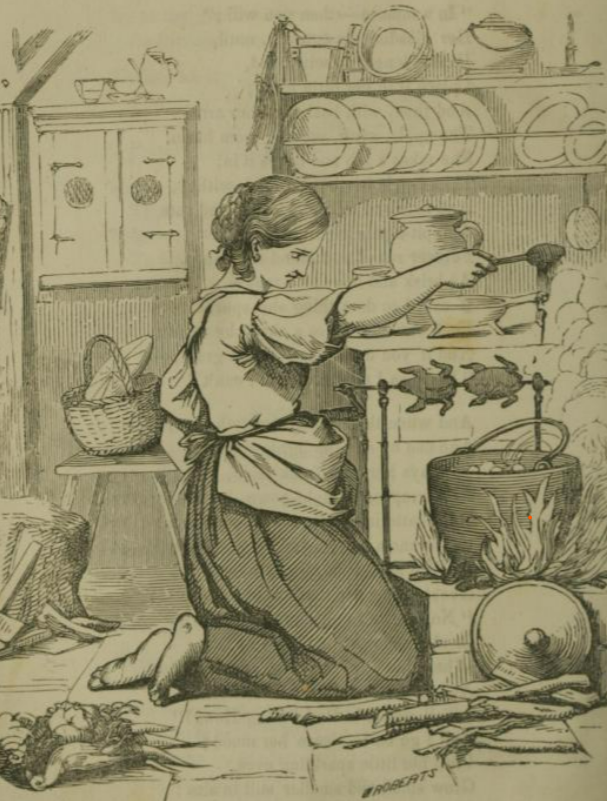
The kitchen was the engine room that powered the Victorian Household. Every kitchen was staffed by a cook. The duties of a cook varied depended on the size of the house and how many servants were employed. Larger households employed a kitchen maid and a charwoman (a woman hired to clean the kitchen) to lighten the cook’s workload, while in more modest homes the cook acted as Cook-General, meaning the meals she prepared would be simpler due to her more extensive list of tasks. Whatever the workload, it was expected that the meals prepared would be sufficiently nutritious to preserve the health of the household members.
Theatre of the Past Wardrobe Department: The Housemaid
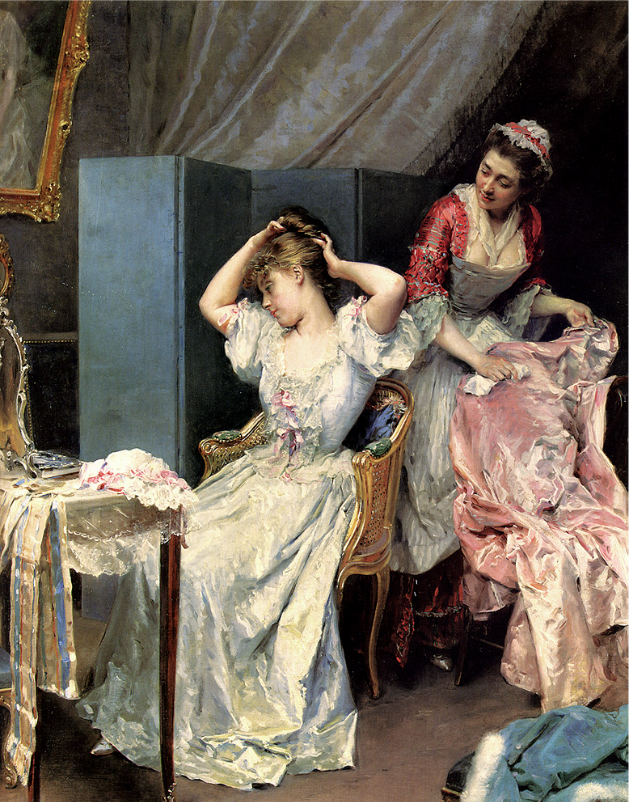
While women of the upper classes were attended to by a highly trained Lady’s Maid, a wealthy middle-class home would rely on a skilled housemaid or parlourmaid to assist with their daily wardrobe and hairstyling.
Before dinner was served in the evening, the housemaid would assist the women of the household to change into their evening wear. This would involve the lacing up of corsets and intricate fastenings on formal dinner gowns. A housemaid would also brush and style the woman’s hair, creating simplistic yet elegant hairstyles with decorations such as woven ribbons or flowers.
The housemaid was also responsible for the maintenance of the dresses and would use her needlework skills to make repairs, ironing out any wrinkles and dabbing away stains. She would spend her nights brushing mud out of the gowns.
Back of House
Theatre of the Past Apprentice: Between-Maid
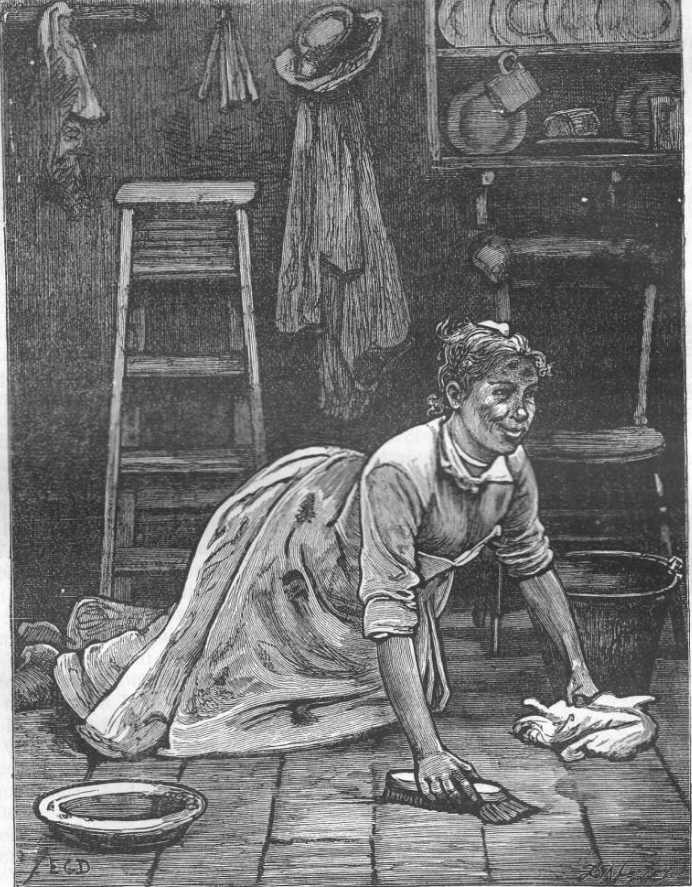
In most middle-class homes, where a retinue of housemaids was unaffordable, a young girl nicknamed the ‘Tweeny’ was hired to fulfil fifteen-hour days of gruelling labour, ending her day with the locking up at 11 pm. The name ‘Between Maid’ encapsulated the different domains of work, both ‘front of house’ and ‘backstage’, a Tweeny had to assume. Her tasks ranged from cleaning the kitchen fireplaces to assisting the parlour maid to serve afternoon tea. Just as many a theatre apprentice finds themselves subject to many odd jobs, from painting scenery to delivering coffee to the director, a Tweeny was responsible for emptying the chamber pots and slop-pails, sweeping and scrubbing the floors.
When the Curtain Falls
At the final curtain after the bows and the cheers, and once the audience has shuffled back to their own reality, a certain silence settles over the theatre. The backstage staff are the last to leave the theatre at night and the first to open it up in the morning, ready for a new day of rehearsals and performances. At 5 am the Tweeny rubs the sleep from her eyes and goes quietly to replace the coal in the grates ready for the fires to be lit. At 6:30 am the cook rises and starts to prepare breakfast. The family wakes at 8am and a new day begins. Day in and day out, the production crew perform thankless tasks vital to the smooth running of a theatre or a household, and their significance should not be taken for granted.
Our journal, Built to Last, asks the question ‘What does it mean to be a good custodian?’ Through essays, conversations and stories rooted in real buildings and the people who care for them, we explore what it takes to preserve an old home’s fabric and its story - and the decisions that shape both.
At Pursuing the Past, we research and write beautifully presented House Stories, turning historical detail into lasting pieces of storytelling that deepen your connection to your home and invite you to take your place as custodian of its continuing story.