How the House Became the Home
“In the theatre of the past that is constituted by memory, the stage setting maintains the characters in their dominant roles…” ~ Gaston Bachelard
The past is its own theatre, complete with dramas and comedies. Every theatre has a stage, and a cast waiting in the wings, ready to perform the opening scene. Our homes are no different. Over the centuries our walls have borne witness to the highs and lows, the tragedies and mundanities of the theatre of human life.
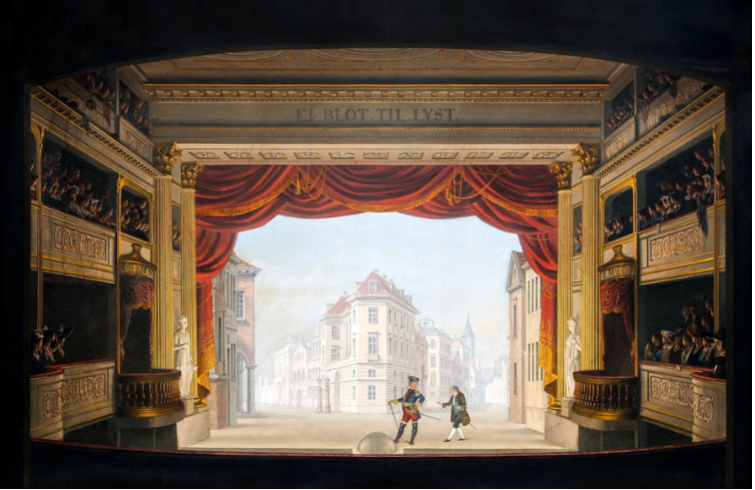
This series of articles introduces the settings and vibrant cast of characters that constitute the home. What does home mean to you? Not just a building of brick and mortar, but a refuge? Does your home provide privacy, somewhere to retreat to at the end of the working day? And would you say that what makes your house a home is the people you share it with?
If you nodded your head at any of the former sentiments, then you are subscribing to the 19th Century invention of the home.
The British concept of ‘home’ as we view it today, that private sanctuary to which, in 1604, Sir Edward Coke attributed the phrase, ‘An Englishman’s home is his castle’, is a creation of the Georgian imagination. The societal transition away from either strictly manorial or communal living to the privacy of the domestic home coincided with the advent of the Romantic Movement. This Georgian literary movement was characterised by the belief in the human need for independent self-expression, as captured by Robert Southey (1834): “There is a magic in that little word: home; it is a mystic circle that surrounds, comforts and virtues never known beyond its hallowed limits.” The philosophy extended into the very architecture: smaller rooms encouraged solitude, while additional corridors and multiple staircases enforced a separation between the family and staff.
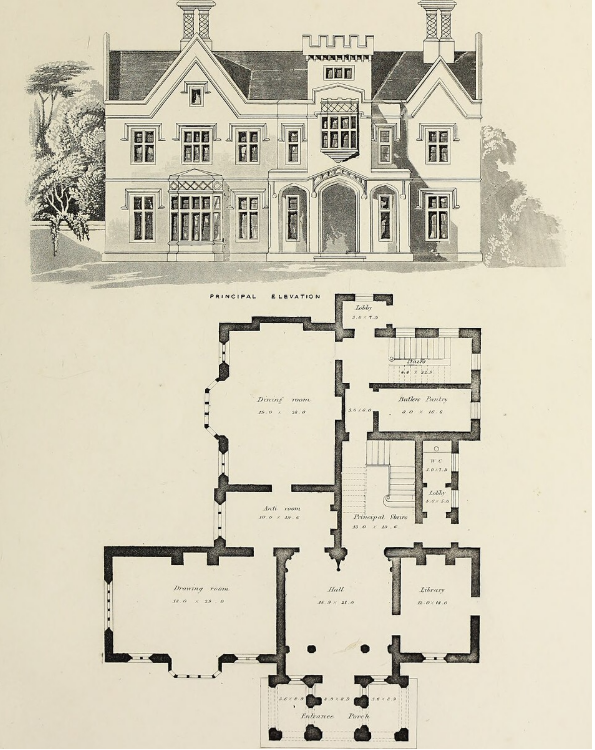
As the Georgian era gave way to the Victorian period, the Georgian ideal of solitude integrated with a new architectural design to form the basis of ‘home’. Domesticity became a focal point of life: the home stood symbolically as the moral centrepiece of Victorian life; a shelter from evils of the outside world. The home became the stage on which people forged their identities; these identities being born out of the relationships between the family members with whom the home is shared. Architectural changes intensified under the strictures of a gendered, class bound, hierarchal society. Victorian houses imposed greater distancing of family from staff; male and female servants were kept apart, confined to a hidden world of winding staircases and double doors. Men retired to the library or smoking room, while women retreated to the boudoir or morning room. Children found themselves restricted to nurseries in the upper floors of the house. While several features of heritage homes may no longer seem to serve a purpose in our modern society, these houses are a direct reflection of human philosophy over the centuries.
The Victorian idealisation of a home refuge, separate from the stresses of work life, was primarily a concept of the middle-classes; its principles of seclusion being viewed as unattainable by both the upper and lower classes. We can see the impact of this philosophy illustrated by the Royal Family today. Traditionally representative of the upper classes, the Royal Family has long resided at its estates, Windsor Castle and Buckingham Palace, which double as a place of work. More recently though, His Majesty has chosen Clarence House as his primary residence, maintaining a distance between home life and his work at Buckingham Palace. The same can be said for the Prince of Wales; while Kensington Palace remains his official office, he has chosen to keep a more modest, family centred life at Forest Lodge in Windsor Great Park.
Our relationship to the home has evolved since the Victorian era. Originally a societal microcosm, the home was the stage on which we rehearsed the roles we would inhabit in wider society; men and women now occupy a less gendered, more equitable status within our homes. However, what has persisted is the symbolism of ‘home’ as a refuge. This is perhaps best illustrated by the 1939 film The Wizard of Oz. Throughout our culture, and spanning generations, Dorothy’s immortal words after travailing through the bright, Technicolor world of Oz resonate with us all.
‘There’s no place like home!’
Our journal, Built to Last, asks the question ‘What does it mean to be a good custodian?’ Through essays, conversations and stories rooted in real buildings and the people who care for them, we explore what it takes to preserve an old home’s fabric and its story - and the decisions that shape both.
At Pursuing the Past, we research and write beautifully presented House Stories, turning historical detail into lasting pieces of storytelling that deepen your connection to your home and invite you to take your place as custodian of its continuing story.