‘Manhood is the defeat of childhood narcissism’ — on architecture, masculinity and life inside the Victorian boarding school.
Reprise:
‘Boarding school. A boy stands, looking bewildered, clutching tightly to a small teddy bear, a reminder of home, while older, stronger boys push past him, jostling and shouting.’
JEROME K. JEROME enters, STAGE LEFT.
“The idle boy is the father of the worthless man. Let every lad remember that his character is being hammered out day by day on the anvil of his daily duties.”
It was a tried and tested Victorian belief that the only way a boy could transition into a young man was by distancing yourself from your childhood home. Home and the nursery floor meant warmth and comfort, a soothing word from a Nanny, the reassuring presence of your mother, the influences of your younger sister. Such a world of femininity could not hope to achieve the sound installation of the values of masculinity. Learning to be a man meant strong discipline, deference to those in authority, slightly rough living quarters and a lot of physical exercise. Enter the world of a Victorian boarding school. At the age of ten, boys were sent away from the home to boarding school with the conviction that only after ten years of receiving an education alongside a large cohort of his peers would a boy be prepared to assume his position of authority in Victorian society. For the first time, as a young boy, the word homesickness would enter his vocabulary.’
In the above extract from the Theatre of the Past article, which explored the relationship between domesticity and masculinity, the world of the Victorian boarding school was discussed as a pivotal moment in the relationship between a boy and his sense of home. But what exactly was it about these institutions that shaped a young boy’s view of domesticity? And how do these institutions connect to the Victorian house?
In the eyes of the Victorians, upper- and middle-class boys were not just boys – they were the future rulers of a modern world, the inheritors of a vast empire. And they were impressionable children who needed moulding in the furnace of the public school system. The rapid expansion of the middle classes during this era gave rise to a greater demand for high-quality education at Britain’s leading public schools, such as Harrow or Eton. In response to the Clarendon Commission of 1861-1864, a ruling was introduced that the rigours of a public school education and hierarchal culture should be withheld until a boy was in his teenage years (a formal entry age of thirteen was officially established in 1904). The stage was set for the dawn of the preparatory school.
Preparatory schools were supposed to be a gentle introduction to public school life for boys aged between seven and thirteen years old. Windelsham House School, founded in 1837 on the Isle of Wight, was the first preparatory school to be established in England. The school’s founding philosophy centred on helping young boys to bridge the transition between home life and the world of the public school. Every attempt was made to nurture the individual. Boys wore their own clothes instead of uniforms and lived together in cosy, mixed-age dormitories. They were actively encouraged to play outdoors and were tenderly cared for by the headmaster’s wife, who acted as their surrogate mother.
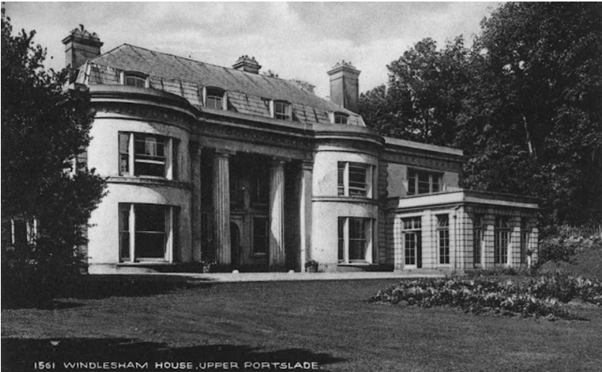
Portslade House was a mansion before becoming Windlesham House School. Copyright © J.Middleton
If Windlesham formed the initial expectation of what preparatory school was like, over time it became the exception rather than the rule of preparatory school life in Britain. The Victorian insistence on separating a boy from the feminine influences of the home meant that boarding schools became places where boys had to learn that any expression of attachment to family and home were displays of weakness to be replaced by emotional suppression and stoicism.
And yet, the roof under which these introspective melodramas played out was the roof of a family house.
In the Victorian era, schools went largely unregulated; establishing fee-paying schools was often viewed as a commercial gamble. A large, detached villa or country house was a more frugal investment than a purpose-built school because, if the enterprise failed, the building could easily revert to its original function. In public schools, boys were accommodated in Victorian villas located outside the school grounds, under the care of a housemaster and his wife. These houses evolved into the contemporary ‘house system’ used in British schools today (made internationally famous by the four houses of Hogwarts in Harry Potter: Gryffindor, Hufflepuff, Ravenclaw, and Slytherin).
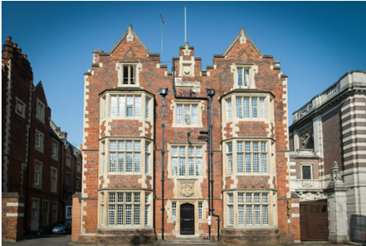
Durnford House, one of the Victorian boarding houses at Eton College
Thus, the walls within which boys were learning to choke back the first cries of homesickness looked uncannily familiar: carpeted rooms with fireplaces, dining rooms and headmaster’s studies filled with comfortable furniture.
This uncanny relationship to domesticity, and the sense of dissonance between home and school is well summarised by Evelyn Waugh:
‘I gazed about me at the long room furnished with an oak settle beside an
empty fireplace, with lockers on one wall, tables and benches, framed photo
graphs of athletic groups, some silver cups in a glass case, a notice-board
already bearing a number of lists and orders which I was too shy to examine
in detail … the place was newly scrubbed and dampish’.
Although preparatory schools and public school houses gave the appearance of a domestic home, the interior layout mimicking that of an upper-middle class family, subtle alterations were stark reminders to boys that school was a world away from home. As noted by Waugh, framed photographs no longer showed images of family members but of the sports teams that would represent your house in school competitions, and glass cases displayed cups signaling academic and sporting achievements rather than a mother’s beloved ceramic ornaments.
These minor changes were symbolic of those undergone by the boys as they relinquished family life for their new life at boarding school, and the interior house design compounded the changes. While the ground floor maintained a well-furnished headmaster’s study and parlour for the headmaster’s wife, the dormitories on the upper floors which the boys inhabited were sparsely furnished with iron framed beds and whitewashed walls. Mass produced meals were served to boys sitting at trestle tables with wooden benches. By comparison, the comfort of their home nursery would seem like a dream.
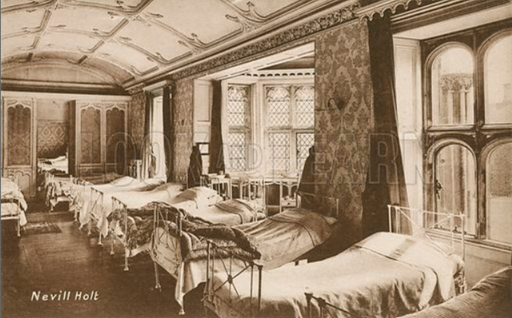
A dormitory at a preparatory school
Ultimately, the goal of the Victorian male boarding school was to take boys and transform them into resilient, stoic and self-reliant young men who would obey authority at a moment’s notice and give their all for the great ‘team’ that was the British Empire. Home was a concept from which a man could easily detach and replicate anywhere, whether it was in the brick-built villas of Britain or at an outpost in India.
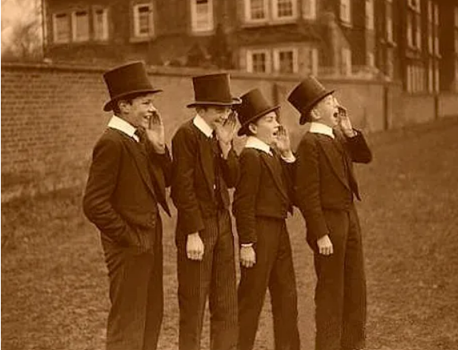
Victorian Public Schoolboys
In practice, these schools altered a boy’s relationship to domesticity. The sudden rupture from the family home created what psychologists today categorise as attachment trauma. This trauma often left boys with very little emotional accessibility, having survived the separation only through the suppression of human instinct. What emerged was the very real risk of emotional abuse later in life, towards wives, children and staff. As a man took on the role of Paterfamilias (Head of Household) his perception of domesticity could be so irreparably damaged that he saw the home as a space to be dominated and its inhabitants as objects to be possessed.
Our journal, Built to Last, asks the question ‘What does it mean to be a good custodian?’ Through essays, conversations and stories rooted in real buildings and the people who care for them, we explore what it takes to preserve an old home’s fabric and its story - and the decisions that shape both.
At Pursuing the Past, we research and write beautifully presented House Stories, turning historical detail into lasting pieces of storytelling that deepen your connection to your home and invite you to take your place as custodian of its continuing story.