The tragic stories behind some of Britain’s most haunted buildings
“…in the stillness he heard little bare feet running across the floor, then laughter and whispering, and a sound like the pages of a big book being turned over…” ~ Lucy Boston, The Children of Green Knowe
My grandfather spent his life living in new build houses. His fear of sharing his existence with the spirits of former occupants was deeply rooted. So, naturally, he had a granddaughter who was fascinated by ghosts. A granddaughter who, to this day, is heartbroken over a little girl called Emily she once heard of on a holiday in York.
It was a spring evening. I was a nine-year-old child staring up at the first-floor window of an old cottage as the guide explained how, during the 1340s, the Black Plague epidemic swept through the old streets of York. In that version of the folklore, once Emily’s parents realised that their fates were caught up in the ‘Black Death’, they locked their daughter in the upstairs room of the house, hoping to spare her life. When the local community discovered the bodies of her parents, they were convinced that Emily was bound to be contagious. They boarded up the cottage doors, leaving Emily alone with her parents’ corpses.
For days, the community passed by the cottage window, blatantly ignoring the terrified sobs and desperate pleas from the newly orphaned child. The cries grew weaker until Emily finally succumbed to starvation, her body otherwise healthy and free from the plague. According to local legend, Emily’s spirit never left the cottage and many claim to have heard her mournful cry and glimpsed her tear-stained face at the window ever since. I was very moved by this story of the abandonment of young Emily, who was of a similar age to me when I first heard her story.
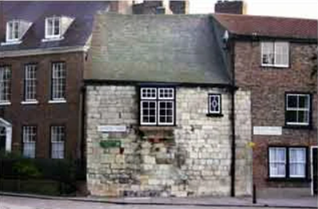
The cottage at 5 College Street, York, where the ghost of Emily has reportedly been seen and heard
While York is considered the most haunted city in the UK, my home city of Liverpool falls at a respectable sixth place. On its outskirts, there is a house which the locals have branded as haunted. It’s the type of place that children might choose to run and touch the front door as part of a dare on a dark evening. Maybe it’s the slightly crooked nature of the architecture that first gave birth to these rumours, because Tower Grange is classed as a cruck house, where the architecture takes pairs of naturally curved timber blades and bends them inwards to create an inverted “V” or “A” frame.
But the rumour is that the house is a remnant of a 13th Century monastic grange (a farming estate owned and run by monks), and this is where the haunting originates. It is said that the apparition of a monk in black habit can be seen wandering in the gardens. The monk supposedly starved to death whilst evading capture by concealing himself in a priest hole.
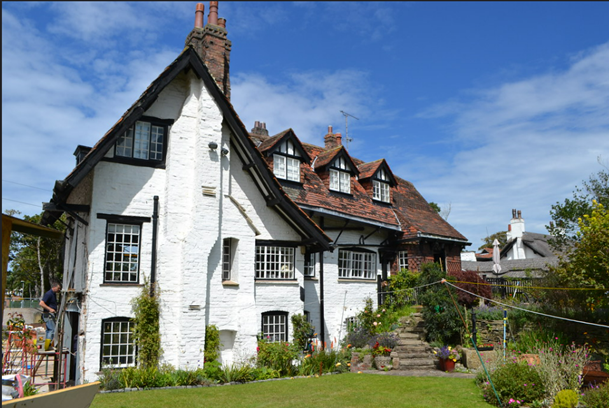
Tower Grange, Merseyside. Image courtesy of Formby Civic Society
Both the apparition of the monk and the ghost of Emily share tales of abandonment and wretchedness before death, and a sense of helplessness after death. The classic signs of a haunted house are familiar to us all: the noises in the night, that certain spot in the hallway that never loses its chill. But what about the gentle spirits who live alongside us through our houses histories?
When she first moved into the Manor House at Hemingford Grey, the author Lucy Boston, viewing herself as the home’s latest custodian, imagined the lives of the residents who had come before her. These imaginings inspired her to write a series of children’s novels: the Green Knowe stories. Her first novel, The Children of Green Knowe, introduces Toby, Alexander and Linnet: gentle ghosts who play alongside the protagonist, Tolly, lifting his loneliness and feelings of abandonment.
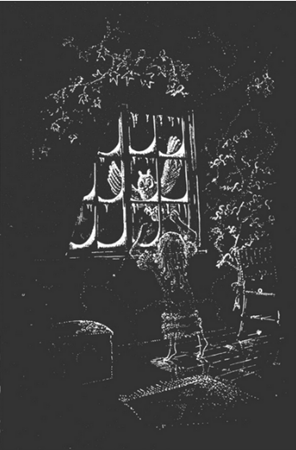
An illustration of the ghosts of the children at Green Knowe
While Emily’s story propelled me into the world of ghosts and haunted buildings, it was the stories of Green Knowe that helped me to understand the beauty in the supernatural. The realm of the supernatural is available to anyone, especially if you have a heritage home. The work of tracing house histories unveils a treasure trove of long-forgotten stories of the ordinary, or sometimes extraordinary, lives lived by those individuals whose home you have inherited. It is only through communication with the ‘ghosts’ of your property that tales of historical abandonment, like Emily’s, may be transformed into contemporary companionships, and so put to rest.
Our journal, Built to Last, asks the question ‘What does it mean to be a good custodian?’ Through essays, conversations and stories rooted in real buildings and the people who care for them, we explore what it takes to preserve an old home’s fabric and its story - and the decisions that shape both.
At Pursuing the Past, we research and write beautifully presented House Stories, turning historical detail into lasting pieces of storytelling that deepen your connection to your home and invite you to take your place as custodian of its continuing story.