Was your home a Wartime Hospital?
Wartime has always been a great leveller. People of different backgrounds and economic and social status suddenly find commonality in the face of a shared hardship. On the Home Front of the First World War, lives were altered forever. But what about our homes? How were the stories of our homes changed under the pressures of war?
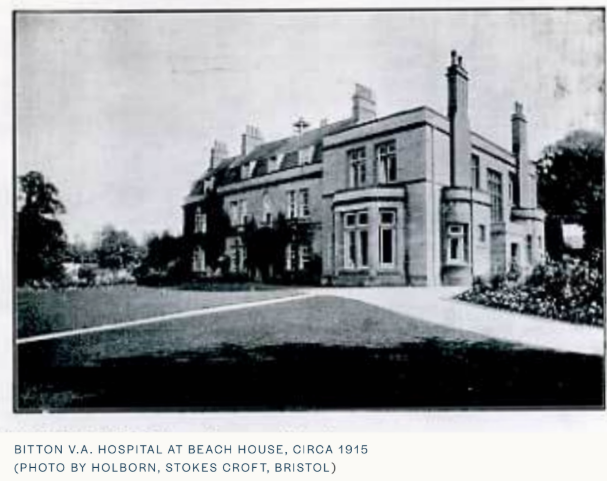
Case Study: Beach House
Estimated to be constructed sometime in the late eighteenth century, Beach House in Gloucestershire began life as a family home for respectable members of society. The ‘House, garden, pleasure ground and buildings’ was a wonderful playground for small children and left very happy childhood memories with Phylis, Evelyn and Claire Walker, the three daughters of Horace and Winifred, who purchased Beach House in 1908 and established their family home. At the time of the 1911 Census, Horace had become the Managing Director of H.J Packer and Co. Ltd., a chocolate and confectionary manufacturer. His young family were enjoying their family life in the twilight days of the Edwardian Era.
In the summer of 1914, the eruption of war in Europe shook the foundations of society. Not a single house across the UK was immune from its impact. Wars throughout the nineteenth century had revealed to the medical profession that recovery from war injuries, both physical and mental, took longer than a stint in a military hospital. Convalescent hospitals were established, leaving medical experts to believe Britain was in a superior position moving into the First World War. However, no one anticipated the severe influx of physical or mental injuries the newly mechanised war would bring, leaving military hospitals at risk of major overcrowding.
Enter the country house.
The first house in the UK to be adapted as a convalescent home was Wrest Park in Bedfordshire. Inspired by the philanthropic actions of Auberon Herbert (9th Baron Lucas), many others followed soon after. The Walker family of Beach House were swept along this wave of patriotic, philanthropic fervour and, by early spring 1915, Beach House was opened as Beach House Hospital.
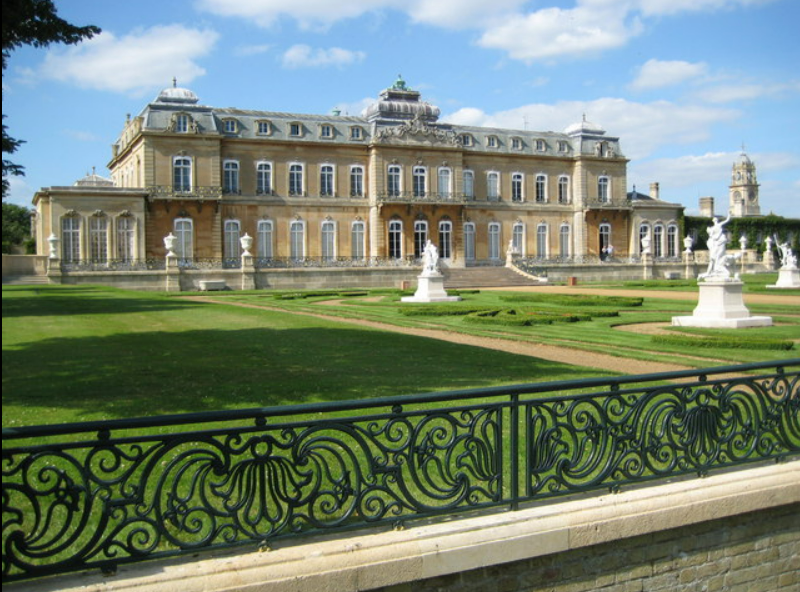
Image: Wrest Park, Bedfordshire
Convalescent homes were a crucial part of the recovery process for the soldiers who found themselves there. Unlike the brusque and somewhat detached attitudes found in military hospitals, convalescent homes were viewed as warm and welcoming. Given that most families remained at their residence, these homes managed to retain their sense of a homely, family atmosphere. Very often, residents didn’t just give up their homes, but their personal lives too; Winifred Walker became the commander of Beach House Hospital, giving her time and energy to serve the young men in her care.
Case Study: Glamis Castle
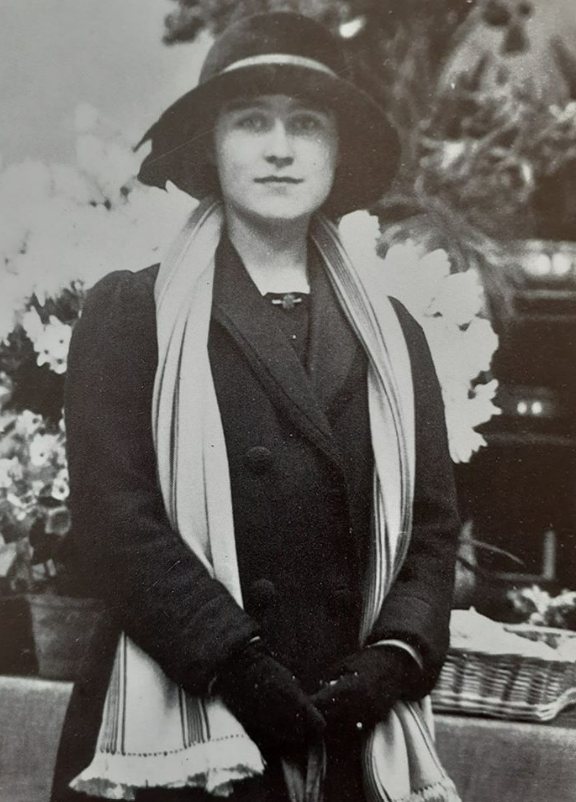
Image: Lady Elizabeth Bowes-Lyon, age fifteen
Even younger members of the family could get involved with the care of the soldiers. A famous residence which converted into a convalescent home was Glamis Castle, seat of the Bowes-Lyon family. Glamis most notable resident, Lady Elizabeth Bowes-Lyon (who later became Queen Consort, and later still the Queen Mother), was a teenager during the First World War, and her friendly nature soon made her popular with the soldiers. Though too young to participate in any nursing or physical rehabilitation, she would engage the soldiers in conversation, join them in a game of cards and even write letters to their loved ones when a patient was too badly injured to write in his own hand. (As many soldiers kept up a continued correspondence with their host families following discharge, a soldier’s progress could be assessed by the families based on the quality of their handwriting.) Lady Elizabeth’s friendliness can be inferred from letters she exchanged with soldiers after they finished their stay, writing exuberant updates about life at Glamis:
“It is lovely here now, and there was terrific excitement here yesterday, as a motor van drove past the castle – we all rushed out, & gazed at it – It was really very exciting!”
The warmth, friendship and fresh air provided at the convalescent homes were often just what the young men needed before transitioning back into civilian life. Especially as the reasons behind the men’s allocation to a convalescent home could be challenging. These men were often having to cope with sudden life-changing disabilities: blindness from gas attacks or loss of limbs meant that they had to adjust to using a wheelchair or prosthetics.
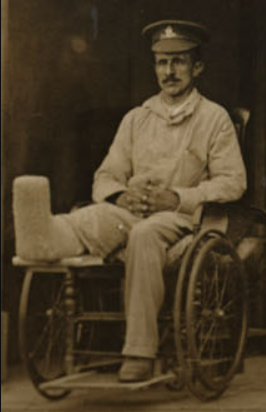
Image: an injured First World War soldier
Despite their hardships, many of the young men retained a healthy sense of humour and, in the case of Glamis Castle, found the time to good-naturedly tease their wealthy hosts.
“Hung, drawn, & quartered” a soldier cheekily added to Lady Elizabeth’s autograph book, quickly clarifying, “Hung in diamonds, drawn in a coach and four, and quartered in the best house in the land!”
For many, these encounters were the first time crossing the class divide, and it was a chance for both patients and hosts to confront each other’s full humanity.
“I can’t tell you how pleased I am to hear the good news.” Lady Elizabeth wrote upon hearing that, in 1919, after a long struggle, one of her former patients had finally found employment. “It is too splendid, after so long, and I am only so sorry that I was so useless and couldn’t help you more.”
Stories of wartime camaraderie like these are not exclusive to those destined to be Queen.
Perhaps you live in a property that was adapted for use during the First World War? How would you begin to find out?
Several architectural changes indicate that a house has been converted to a convalescent home in the past. A couple of the most prominent features are: adaptations for accessibility, and wall scars.
1. Adaptations for accessibility
Many of the soldiers who were sent on from military hospitals to convalescent homes had acquired an injury or disability which required architectural modifications to support their independence and mobility. To allow for wheelchair access, original stairs were frequently smoothed over or removed and replaced by wooden or stone ramps. This is particularly true of steps leading to outdoor areas, as access to exercise, fresh air and sunshine were viewed as an essential part of recovery.
Does your property have steps that show clear signs of having been altered? Are the stones smoothed over? Are there remnants of wooden ramps, or have any ramps been left intact?
2. Wall scars
Examine your walls. Are there any lines or tracks that have obviously been filled in or covered? Larger rooms which would have originally been the ballroom, library or drawing room were sectioned using temporary wooden partitions. The creation of smaller rooms maintained separate living spaces between the patients and the family as well as increasing the availability of staff rooms or isolation wards.
Like the human body, our homes also bear the scars of war. These marks often go unnoticed but silently carry the spirit of untold tales of bravery and sacrifice. Bravery of the young soldiers facing up to a life that had been irrevocably altered, oftentimes battling the grief and survivor’s guilt that accompanies losing comrades in battle. Sacrifice made by the families who opened their homes and hearts to men who came from many different walks of life; families who nursed them, laughed with them, cried with them, and held their hands through one of the darkest chapters of the twentieth century.
Our journal, Built to Last, asks the question ‘What does it mean to be a good custodian?’ Through essays, conversations and stories rooted in real buildings and the people who care for them, we explore what it takes to preserve an old home’s fabric and its story - and the decisions that shape both.
At Pursuing the Past, we research and write beautifully presented House Stories, turning historical detail into lasting pieces of storytelling that deepen your connection to your home and invite you to take your place as custodian of its continuing story.