Toxins that Infiltrated the Home
A Mystery Left Unsolved
7pm. Thursday, 7th October 1880. Kidds Hill, Coleman’s Hatch. Screaming. From the direction of Forest Cottage. Upon arrival at the scene, a lady dressed only in a flannel petticoat and chemise is stretched out on the front steps, crying out for God’s mercy. There is talk of poison. One day later she is dead.
The Coroner’s Report confirmed that on 8th October 1880, Mrs Sarah Wheatley passed away from Strychnine poisoning. But what remained unclear was the motive behind Mrs Wheatley’s death. And the question lingered: who administered the poison?
Up until that point, there was nothing out of the ordinary about Mrs Wheatley’s life. Born Sarah Sellwood, the daughter of a labourer, she married John Wheatley, a farmer, in 1842 when she was 31 years old and together they had a family, including three sons.
Eliza Welfare, the first witness, claimed that, at 4pm on 7th October, Mrs Wheatley’s husband asked her to attend his home straight away, because his wife had drunk some poison that he was certain “would finish her”. Eliza stated that in between ‘fits’, Mrs Wheatley was coherent and of sound mind.
The second witness, a Mrs Philadelphia Thorpe, revealed that, on 6th October, Mrs Wheatley turned up on her doorstep asking for peppermint because she felt so unwell. During the conversation, Mrs Wheatley lamented that had she known Mrs Thorpe’s daughter was going shopping she would have asked her to purchase some brandy for her. On 7th October, Mrs Wheatley returned, asking for more peppermint. Later that evening the screaming began. Mrs Thorpe was immediately suspicious of Mr Wheately, claiming he was under the influence of drink, and it was he who insisted Mrs Wheatley had self-administered the poison in attempting to take her own life.
When Mrs Thorpe asked Mrs Wheatley directly whether she had taken the poison, Mrs Wheatley didn’t reply. The doctor arrived at 9pm, at which point Mrs Thorpe felt compelled to reproach Mr Wheatley as she felt he was pressuring his wife into a confession: “You did take the poison, didn’t you Sarah?... I know – well, she took it and I saw her.”
“Say yes, Sarah,” he urged when Mrs Wheatley replied “No,” to the doctor’s question of whether she had taken the poison by mistake.
In John Wheatley’s account he claimed that, on 7th October, he went out at around 2-3pm to the Hatch Inn, where he was drinking until 4-5pm. He recalled that he went to fetch Mrs Thorpe because he believed his wife was drunk. It was only when he discovered a crumpled packet in the fire that he realised his wife had taken the rat poison he had purchased a month earlier. He refuted the conversation as reported by Mrs Thorpe, say that while he could not remember what was exchanged, he was certain that he never said the things she claimed. He went on to say that, although his wife had been ill for two to three days before her death, they lived a happy life, and she would have no desire to take her own life.
Although acute poisoning was the cause of Mrs Wheately’s death, to this day the motivations surrounding it remain unresolved.
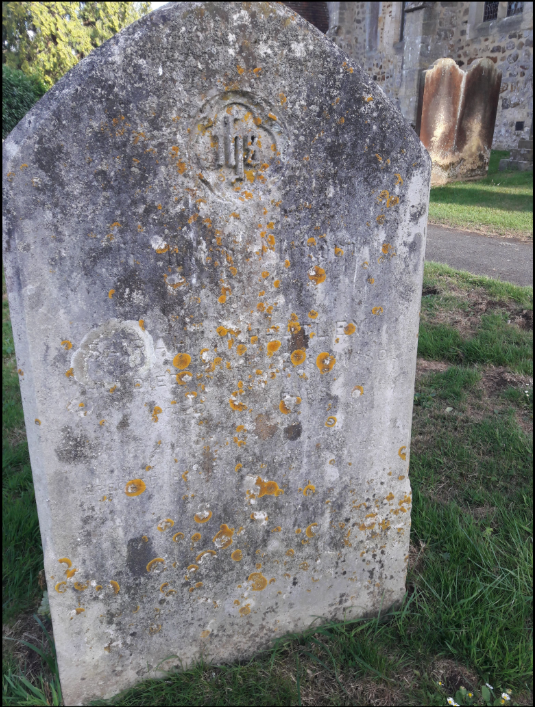
Image: the grave of Sarah Wheatley.
The House as a Death Trap
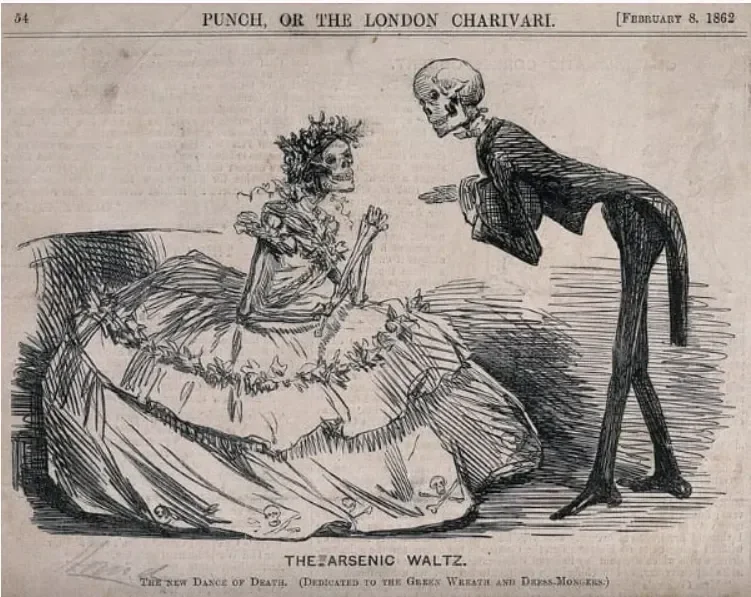
In Britain, the greatest number of poison-related deaths occurred during the Victorian period. Dubbed “the arsenic century”, just over half the deaths associated with poison were ruled as suicides. But there were other mysterious deaths that posed a threat to the Victorians.
It began gradually. The headaches. The fatigue. Then troubling skin issues. Unexplained breathing difficulties. And eventually death.
Whatever the mystery illness was it seemed to particularly prey on the most vulnerable: babies and children. But with such vague symptoms, it was almost impossible for doctors to identify the cause of this illness.
Over time, connections began to be made. The illness seemed to manifest in people whose homes had green wallpaper. Initially, doctors were reluctant to explore this theory further. After all, one could hardly write “Cause of Death: Green Wallpaper” on a death certificate.
It was only after two tragic events that doctors felt compelled to investigate. In 1858, a three- year-old died after chewing on a scrap of green wallpaper that had flaked off the wall of his nursery. And in 1862, following the devastating deaths of four siblings who shared a bedroom decorated with green wallpaper, Dr. Thomas Orton insisted an autopsy be performed. The results proved that the children’s tissues contained fatal amounts of arsenic.
In Victorian society, easily accessible heavy metals and industrial chemicals often infiltrated into the home. The mechanisation of the Victorian age also enabled mass production for the first time. One feature of interior design that benefitted from mass production was wallpaper. Wallpaper grew cheaper and quickly became available in a wide range of vibrant colours. A favourite colour was a bright shade of green, known as Scheele’s Green (and sometime later Paris Green), named after the Swedish chemist, Carl Scheele, who created the distinctive pigment by mixing copper with arsenic oxide.
The dampness associated with Victorian properties reacted with the arsenic in the wallpaper to shed toxic dust particles which, when inhaled, resulted in severe illness. It wasn’t until 1879 that major designers began to remove arsenic from their products.
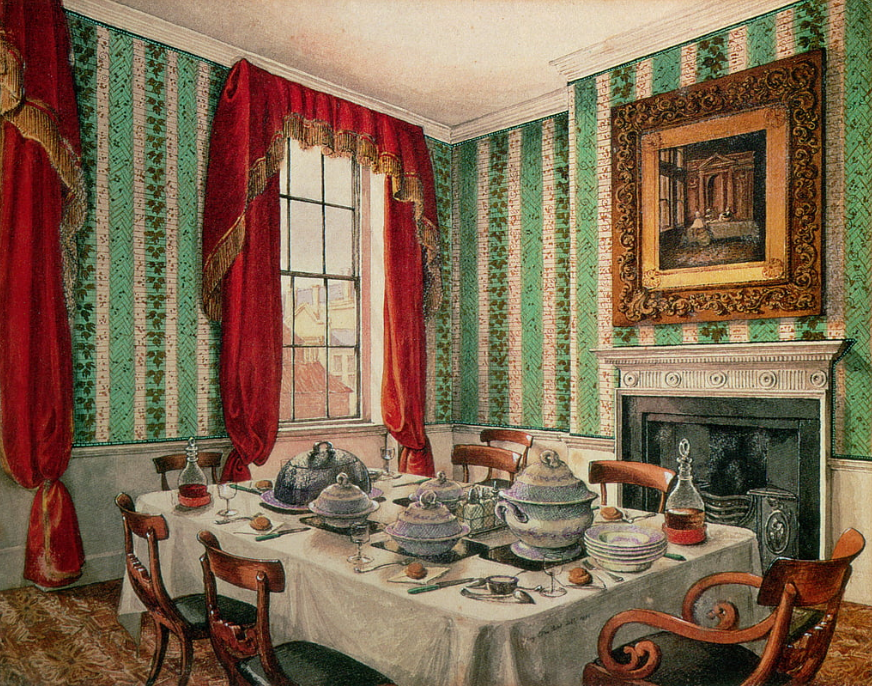
Scheele’s Green Wallpaper featured in ‘Dining Room at York’ by Mary Ellen Best, 1840s.
Fragments of a Toxic History
In heritage properties, specifically in those of the pre-1900s where original decorations are frequently preserved, it isn’t uncommon for some fragments of historic wallpapers to have survived. Many of these properties also contain original arsenic-based paint and wall coverings. However, most of these features are covered beneath newer wallpaper or paint, meaning that the main risk occurs when the materials are disturbed during property refurbishments.
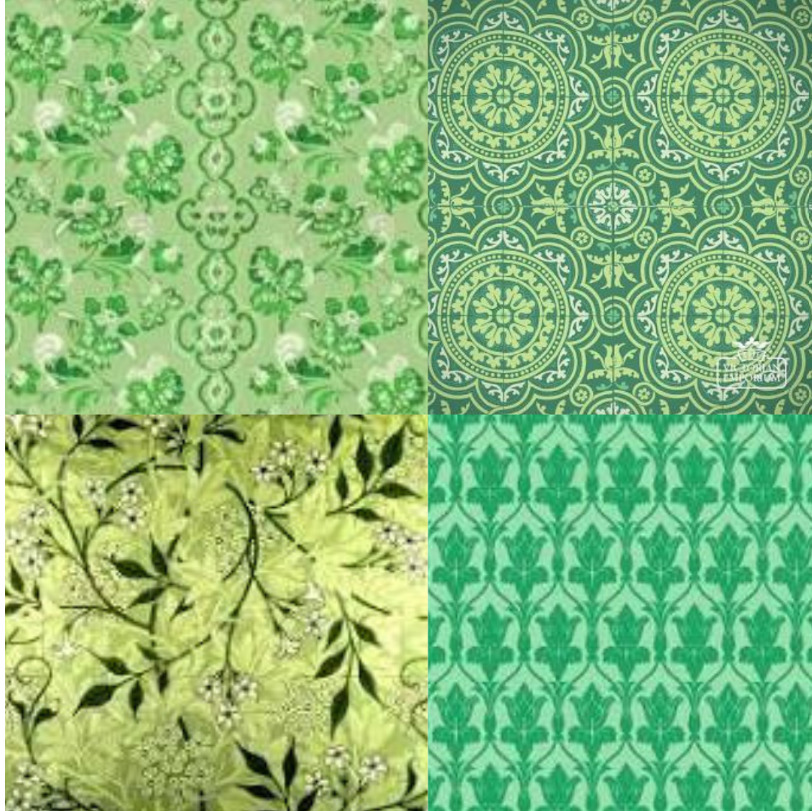
Image: a sample of Victorian wallpapers containing arsenic.
If you have a heritage home and are considering doing refurbishments, or you have noticed any green-pigmented original features in your home, it is important that you consider sample testing. While original features of heritage homes can help to weave a tale about their histories and the lives of the former occupants, it is essential to keep safety a priority. If you do happen to chance upon a fragment of Scheele’s Green wallpaper, the story your home will tell is that it featured at the epicentre of the nineteenth century’s Golden Age of poison!
Our journal, Built to Last, asks the question ‘What does it mean to be a good custodian?’ Through essays, conversations and stories rooted in real buildings and the people who care for them, we explore what it takes to preserve an old home’s fabric and its story - and the decisions that shape both.
At Pursuing the Past, we research and write beautifully presented House Stories, turning historical detail into lasting pieces of storytelling that deepen your connection to your home and invite you to take your place as custodian of its continuing story.