The history behind Britain’s houses named Old Schoolhouse, from their origins as places of learning to the stories they hold today.
School bells ringing; children crunching across frosted ground, leather satchels swinging; screeching of chalk against slate; terrifying swishing of the schoolmaster’s cane: these are the sounds and sights we conjure up when we hear or see the phrase ‘The Old Schoolhouse’.
Almost every village and town across Britain has a building named The Old Schoolhouse. Although these buildings make up only a tiny percentage of British architecture (estimates indicate that only 0.015% of buildings account for the many cafes or offices that carry the name), the name itself ranks within the ten most common house titles.
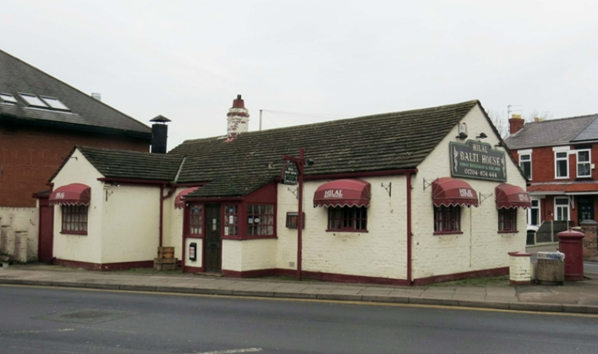
Image: a former Schoolhouse in Merseyside which is now a restaurant.
In the Gloucestershire village of South Woodchester, there stands one such house. Historically connected to the local woollen cloth industry, South Woodchester’s education system was funded by charitable means; St. Loe’s Charity School being founded in 1699. The Parish’s consortium of Dame Schools flourished following the receipt in 1705 of a bequest from local resident, Elizabeth Seys, of £400; a donation intended to transform the education of the poor girls of the parish.
Dame Schools were a primitive form of early years education, providing a basic education for children between the ages of two and seven. These young children were taught in single rooms attached to a domestic building by widows or single women, nicknamed ‘Dames’. The standard of education received varied wildly depending on the knowledge of the women themselves. Some children were given a strong foundation in numeracy and literacy, as well as additional skills, such as woodwork for boys and painting and sewing for girls. For others it was simply cheap childcare for working parents. Over time, these schools evolved into small infant schools.
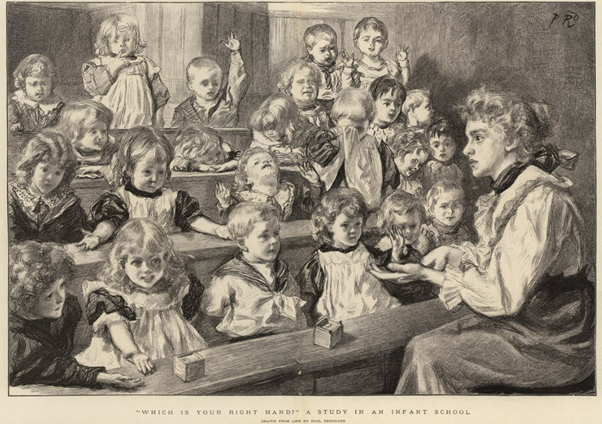
Image: ‘Which is your right hand?’ A drawing of an Infant School by Paul Renouard
In the 1861 Census, the Schoolhouse at South Woodchester was under the care of Eliza Wise, a 37-year-old widow. Her profession is recorded as ‘Governess, Infant School’. The presence of her young son, Samuel, denotes that the schoolhouse was not just Eliza’s place of work, but the family home of a widowed mother desperately saving up her two pence schooling fees to provide shelter and food for her child. A decade later, following the passing of Eliza Wise in 1866, the schoolhouse was home to 45-year-old Eliza Hapgood, who described her occupation as ‘Teacher of Infant School’. Miss Hapgood shared the house with her mother, Hannah, a retired employee of the woollen cloth industry.
In the tradition of Dame Schools, a small room would have been set aside as the schoolroom. In the morning, up to fifteen local children would have gathered around the fireplace, scratching out their first letters on to squeaky slates. Miss Wise might have taught directly from a primer: a textbook filled with simple reading lessons and religious instruction, while Miss Hapgood might have patiently listened to a child’s stumbling recitation from a Psalter.
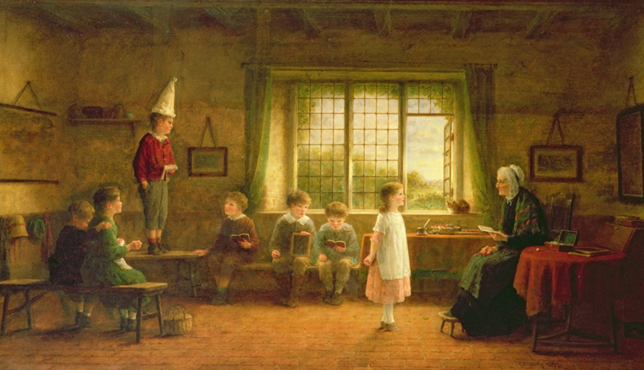
Image: A painting of a Dame School by Frederick Daniel Hardy
Charles Dickens, in his wry manner, captures Pip’s experiences in a haphazard Dame School in Great Expectations:
‘Mr. Wopsle’s great-aunt kept an evening school in the village; that is to say, she was a ridiculous old woman of limited means and unlimited infirmity, who used to go to sleep from six to seven every evening, in the society of youth who paid two pence per week each, for the improving opportunity of seeing her do it. She rented a small cottage, and Mr. Wopsle had the room up stairs, where we students used to overhear him reading aloud in a most dignified and terrific manner, and occasionally bumping on the ceiling.’
In response to the 1870 Education Act, Schoolhouses became purpose-built buildings. Ten years later, the 1880 Education Act signalled the death knoll for both Dame Schools and small, privately run infant schools; for the first time education was regulated and made compulsory. Over the next few years, attendance at Dame Schools waned dramatically and, in May 1889, the Schoolhouse at South Woodchester was sold, later becoming a private residence. The responsibility for the children’s education passed to the local authority and a new village school was established. It was the end of a very distinctive chapter of early education in Britain.
Converting old schoolhouses into today’s homes can result in designs that are contemporary while retaining the beautiful heritage qualities that paint a vivid picture of the past. In Sancreed, West Cornwall, a 250-year-old schoolhouse has been converted into a modern living space. The residential quarters were absorbed into the overall re-modelling, but the former schoolroom maintains its original features, including exposed, white-washed stonework and high ceilings, allowing us to imagine better its former purpose.
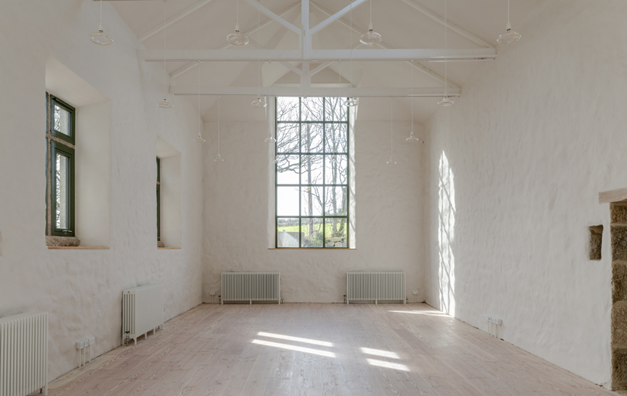
Image Courtesy of The Modern House: A Cornish Schoolhouse that has been re-modelled into a residential property
So, if your property happens to be named ‘The Old Schoolhouse’, the next time you sit by your fire on a winter’s day, try to picture the scraping of chairs and clatter of wooden-soled shoes, the chatter, the laughter, the nervous recitations and chanting of ABCs. These are the parallel lives you are living alongside, separated only by time.
Our journal, Built to Last, asks the question ‘What does it mean to be a good custodian?’ Through essays, conversations and stories rooted in real buildings and the people who care for them, we explore what it takes to preserve an old home’s fabric and its story - and the decisions that shape both.
At Pursuing the Past, we research and write beautifully presented House Stories, turning historical detail into lasting pieces of storytelling that deepen your connection to your home and invite you to take your place as custodian of its continuing story.