Like the Wings of a Butterfly
In a quiet corner of Surrey lies the town of Chertsey, once home to an 18th century cottage. The cottage was falling into disrepair when it was purchased in the mid-1930s by a stockbroker, Gerald Schlesinger. Rather than undergo the, often, painstaking work of renovation, Schlesinger opted to hire an architect, Sir Raymond McGrath, who transformed the cottage into a house worthy of the modern age. McGrath later described his work on what would become known as St. Ann’s Court as the most ambitious project of his career.
St. Ann’s Court was circular in design; some said the house was like a drum, while McGrath commented it was akin to a wheel of cheese! This experimental design was born out of the 1930s streamline moderne style; the circular motif symbolised modernity and the technological advancement of the new era.
In many ways the house mirrored the lives of its new residents, who certainly marched to the beat of their own drum.
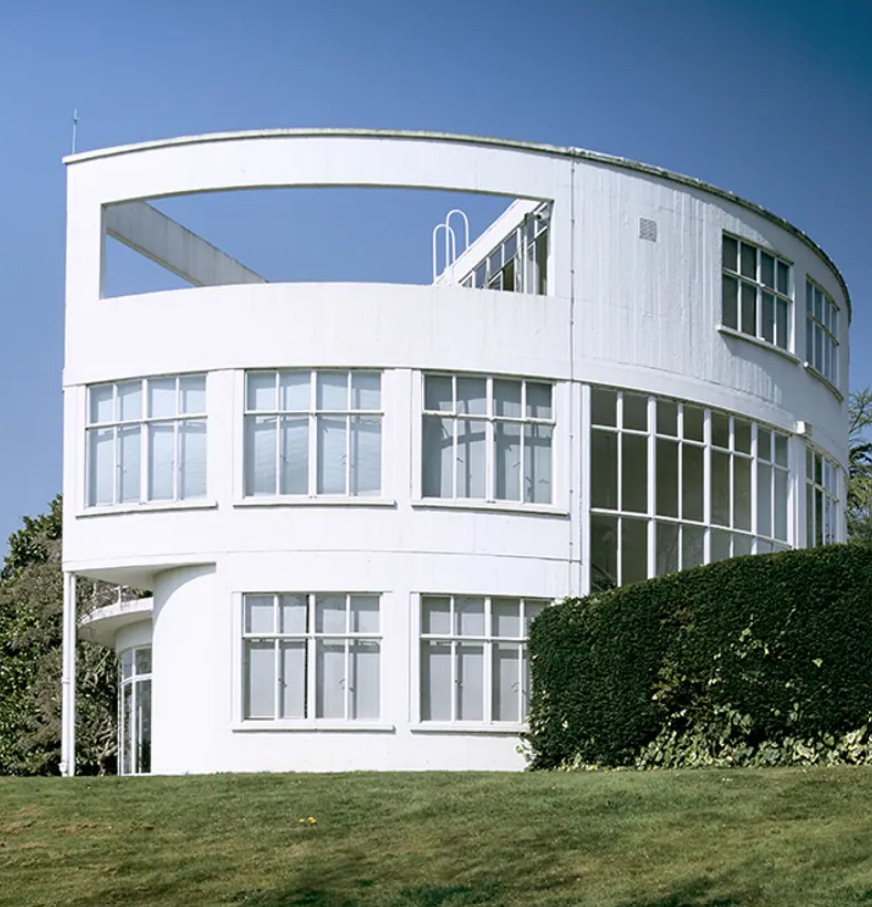
St. Ann’s Court, Chertsey. Image Credit: Morley von Sternberg, RIBA Collections
Gerald Schlesinger moved into St. Ann’s Court with landscape architect Sir Christopher Tunnard. Schlesinger and Tunnard were romantic partners, something unbeknownst to almost everyone in their social circle, except for McGrath. Raymond McGrath was known within the secretive LGBTQ circles of the 1930s as somebody who could be trusted to support gay couples, his worldview having been heavily influenced by his mentor, Mansfield Forbes.
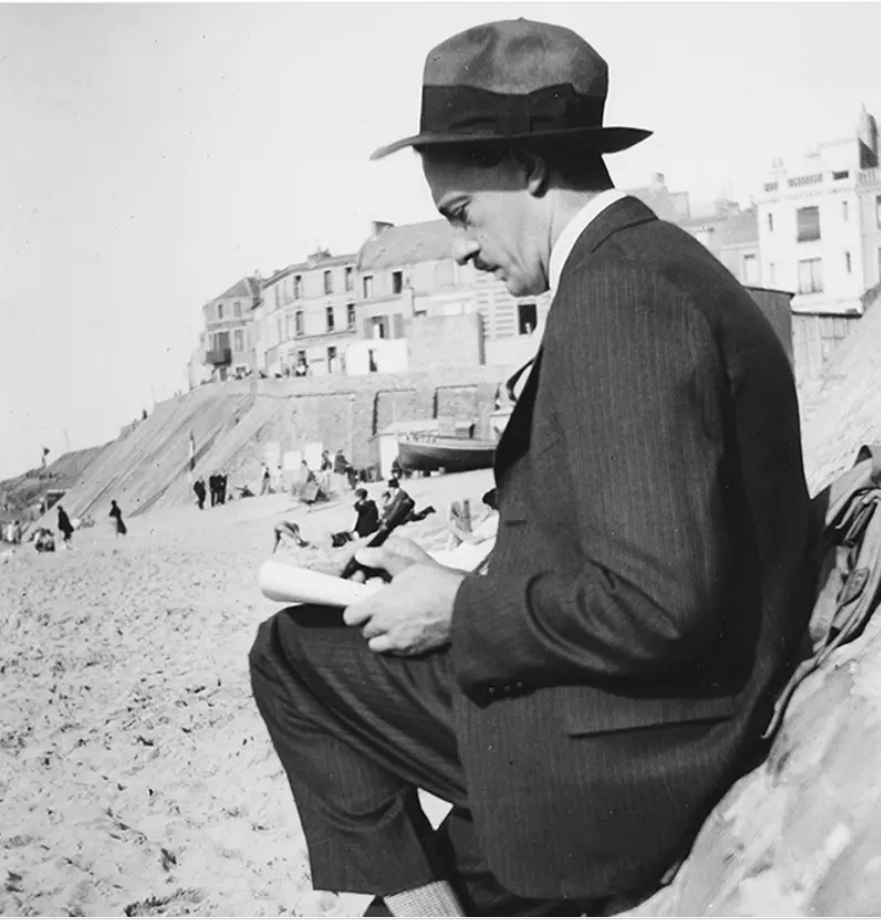
Raymond McGrath. Image Credit: Architectural Press Archive, RIBA Collections
Mansfield Forbes was a beloved eccentric and a fellow at Clare College, Cambridge. He gave McGrath his first professional opportunity: re-modelling the interior of his Victorian Villa Finella. Forbes was a gay man, and it was through his influence that McGrath gained insight and empathy into a community that was then so stigmatised. He transformed Finella into a celebration of Queer architecture, incorporating fan-vaulted ceilings as a flamboyant ode to Walpole’s Strawberry Hill House.
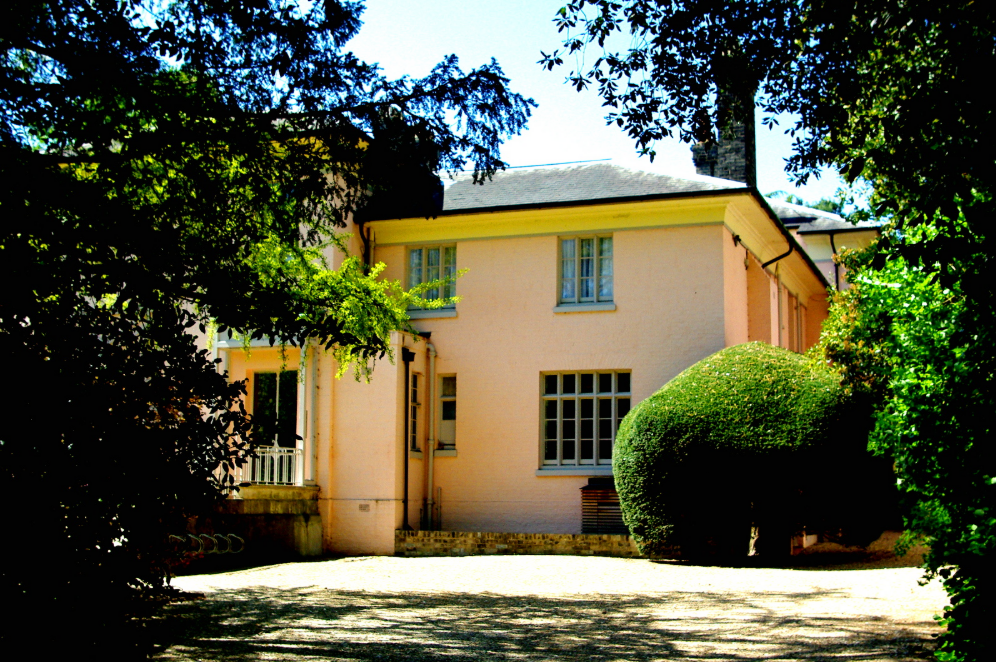
The exterior of Mansfield Forbes’ home, Finella
Collaborating with Schlesinger and Tunnard on the re-modelling of St. Ann’s Court, McGrath curated an interior that would fill the home’s primary function to protect its inhabitants from the outside world.
‘Like the Wings of a Butterfly’
In the 1930s homosexuality was criminalised, with the penalties of prison sentences and hard labour awaiting those who were caught. It was imperative that the true nature of Schlesinger and Tunnard’s relationship be kept hidden from prying eyes.
Schlesinger and Tunnard were known for hosting elaborate parties which reflected their eccentricities; Schlesinger would serve his guests dinner with a parrot perched on his shoulder! As a visitor staying on the first floor, you would walk by Schlesinger and Tunnard’s bedrooms without a second thought. Each bedroom had a single bed tucked away in a cosy alcove – a charming arrangement. However, the visitor was actually witnessing McGrath’s great illusory trick.
When the couple were alone the perceived walls (in reality, partition screens) could be folded back to reveal a master bedroom. ‘Like the wings of a butterfly’, McGrath later explained, the caterpillar metamorphosed, its wings unfurling. The two beds were constructed on wheels and could easily be removed from the alcoves to be joined together to create a double bed. And while Schlesinger and Tunnard only resided at St. Ann’s Court for a relatively short time, their presence had a great impact on how architecture and interior design was used to protect its residents.
Discovering the history of your house can reveal dramatic stories from times past, whether your home sheltered a priest hiding from persecution in 16th century England or provided rest for a battle-weary suffragette in the early 1900s. The clues could lie within the walls of your house; the stories no longer need to remain hidden.
Our journal, Built to Last, asks the question ‘What does it mean to be a good custodian?’ Through essays, conversations and stories rooted in real buildings and the people who care for them, we explore what it takes to preserve an old home’s fabric and its story - and the decisions that shape both.
At Pursuing the Past, we research and write beautifully presented House Stories, turning historical detail into lasting pieces of storytelling that deepen your connection to your home and invite you to take your place as custodian of its continuing story.