When does 'improvement' begin to erase the very things that make a building worth preserving?
There is a particular kind of temptation that comes with an old property.
You look at a room with draughty windows, uneven floors or inadequate heating and, naturally, begin to imagine how much better it could be. Houses should be warm, bright, safe and efficient, more so with every passing generation. But what happens when the house (if you can call it that – it looks more like a castle!) in question is Knole, a building whose fabric and contents carry centuries of history? Here, an improvement is much harder to define. Making the building function better for modern life can also mean changing the very conditions that allowed its historic character to survive.
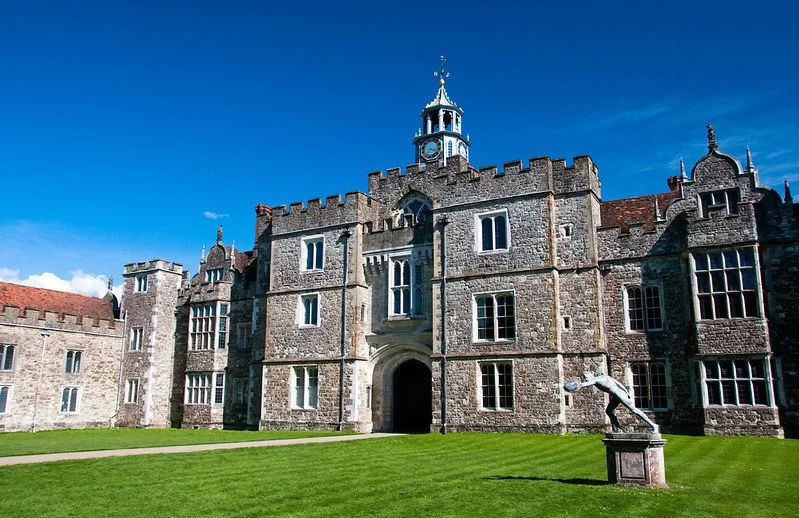
Knole has been changing for a very long time. Originally built for the Archbishop of Canterbury in 1456, it became a royal residence before Henry VIII gave it to Thomas Sackville in 1603, and the Sackville family subsequently remodelled the house. So it has never been a perfectly preserved snapshot of one particular moment. Its extraordinary collection of furniture, paintings and textiles, much of which has been on display since the seventeenth century, is part of that history of continual use and change. The challenge for its present custodians is not to prevent Knole from changing, but to decide which changes allow it to have a future without demanding that it becomes something it was never supposed to be.
This question of modernisation became particularly urgent by 2012, when the National Trust described Knole as facing a crisis. The building was deteriorating and the damp environment was damaging its interiors and collections, prompting the six-year Inspired by Knole project, supported by a £19.8 million investment. The work was extensive: the roofs, walls and windows were repaired and stabilised, while new insulation, heating, fire protection, security systems and electrical wiring were introduced. Half of the historic showrooms were closed while this work took place, with objects carefully removed and stored and historic floorboards and panelling lifted so that essential work could be carried out beneath them.
It would be easy to look at a list like that and think of conservation as a process of bringing an old house up to date. In reality, the decisions are considerably more complicated. Knole is not just a building that happens to contain a collection, the building and the objects inside it affect one another. The project was partly driven by the need to create more stable environmental conditions for the historic interiors and collections, which include exceptionally rare Stuart furniture, paintings and textiles. The solution therefore couldn’t just be to make the rooms more comfortable for the people visiting them, the conditions had to work for the objects that had survived there for centuries, too.
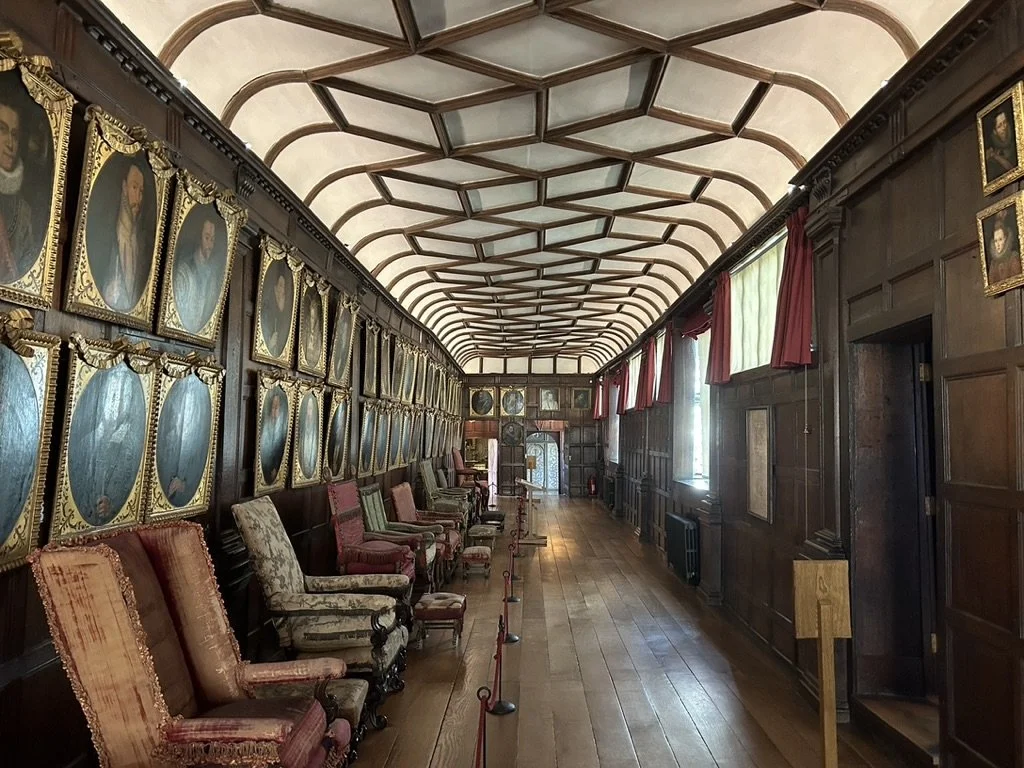
This is where the idea of improvement starts to become tricky. A warmer room might feel like an obvious improvement to us, but stability matters more than warmth where historic objects are concerned. A modern electrical system is an improvement in terms of safety and functionality, but installing it in a centuries-old building means finding ways to introduce something new without unnecessarily disturbing what is already there. Even the practical work of repairing the house involved lifting historic fabric, carrying out what was necessary beneath it and then putting things back. The objective was not to make Knole look newly built. It was to give the old building enough new support to continue being an old building.
Talk about an oxymoron.
There are some lovely examples of this balance in what happened next. The project did not simply close Knole’s historic spaces to protect them; it found ways to make conservation itself part of the life of the house. A new conservation studio opened in 2017, allowing visitors to watch specialists caring for objects from the collection, while the Hayloft Learning Centre provided an accessible space for workshops, talks and education. The Gatehouse Tower was restored and reinterpreted, while previously inaccessible areas such as the attics were opened to visitors. Elsewhere, a new roof structure was installed on the medieval Knole Barn, with Kentish ragstone and bespoke clay peg tiles used to create a contemporary working conservation studio within a 600-year-old building.
Clearly, none of this amounts to leaving Knole untouched. The house has been adapted so that people can continue to encounter, learn from, and care for it, while modern services have been introduced where they are genuinely necessary. The Brewhouse Café, for example, was refurbished and extended with a new kitchen and additional seating, while the Visitor Centre was relocated and new visitor facilities created. These changes acknowledge that a historic house cannot survive simply by being admired. It needs to remain useful, visited and understood.
So what, then, does the word improve really mean? It assumes that one knows exactly what ‘better’ looks like. For a contemporary house, better might mean more insulation, a more efficient heating system or a more convenient layout. In a historic house, those things can still be valuable, but they have to compete with another (and in my opinion, much more important) definition of value: the things that are irreplaceable because they are old. A room can be, and often is, totally inconvenient and historically important. A floor can be uneven and tell a centuries-old story. A draught can be annoying, while the attempt to eliminate it altogether might alter how the building manages moisture.
Perhaps good custodianship begins when we stop assuming that every imperfection is a problem waiting to be fixed.
This, however, doesn’t mean that old houses should become museums of inconvenience. Knole’s history demonstrates the opposite. It has been altered and repurposed repeatedly, and it continues to accommodate new uses today. The point is not to refuse change but to make sure it is deliberate. A thoughtful custodian might distinguish between changing a house because it genuinely needs something and changing it because we have become accustomed to expecting every building to behave like a modern one.
Perhaps that is the hardest part of looking after a historic home. We inherit not only its beautiful things but its limitations, its peculiarities and its wonderful, accumulated evidence of lives before ours. We can make changes, and sometimes we absolutely should, but every intervention becomes part of the building’s next chapter.
Knole shows us that the best improvements are not necessarily the ones that make an old house feel new. They are the ones that allow it to remain recognisable while giving it the means to survive another generation. In the end, good custodianship may require less of a desire to improve than a willingness to think first, and to ask whether the house actually needs what we think it does.
Our journal, Built to Last, asks the question ‘What does it mean to be a good custodian?’ Through essays, conversations and stories rooted in real buildings and the people who care for them, we explore what it takes to preserve an old home’s fabric and its story - and the decisions that shape both.
At Pursuing the Past, we research and write beautifully presented House Stories, turning historical detail into lasting pieces of storytelling that deepen your connection to your home and invite you to take your place as custodian of its continuing story.